
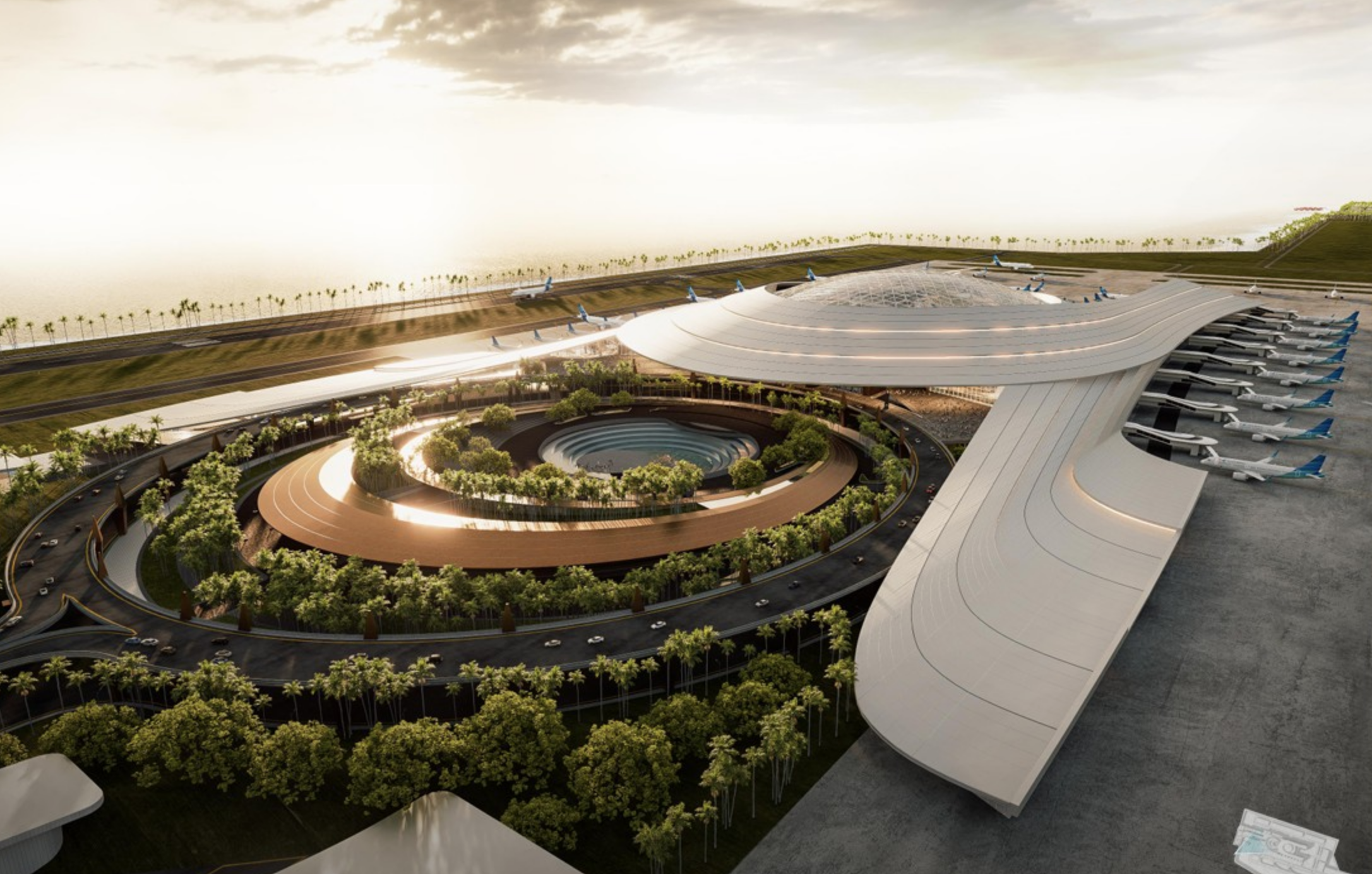
Government Confirms New International Airport in North Bali
Officials have confirmed construction of a major aviation hub in Buleleng Regency, built to double the capacity of the current Ngurah Rai International Airport. This isn't an expansion of what already exists. It's a deliberate redistribution, one meant to make the northern coast a point of arrival rather than a detour after landing somewhere else.
You are looking at a structural change that redefines accessibility for the whole northern arc of the island.
The confirmation moves the project past speculation and into active planning, the kind that shapes investment and travel patterns for decades. It anchors future growth in areas once considered remote. The government evidently sees North Bali as its own economic zone, one that needs dedicated infrastructure rather than transfers from the south.
Doubling Capacity Beyond Ngurah Rai International Airport
Relieving Southern Congestion
The main reason for this new airport is relief: Ngurah Rai is chronically saturated, and a second gateway with twice its handling capacity changes that math. Current infrastructure struggles to absorb peak-season volume without degrading the arrival experience, and travelers headed north have long endured a lengthy overland transfer the moment they land.
A dedicated northern hub removes that friction entirely.
Spreading out arrivals lets the southern corridor operate within its intended limits, while giving direct access to regencies that distance has bottlenecked for years. Guests seeking the quiet of Lovina or Munduk can arrive straight into that setting, keeping the transition from travel to rest intact, which is much of what defines hospitality at the top end.
Projected Passenger Volume Increases
Doubling capacity points to something beyond bigger numbers. It suggests a real shift in who is arriving. Infrastructure expansion in secondary destinations typically precedes a rise in high-value boutique developments, as easier access draws in travelers who once avoided the region for its logistics alone.
Your future guests will likely spend less time in transit and more time with the landscape itself.
More arrivals through a dedicated northern terminal support a higher-yield model, one built on longer stays and deeper immersion rather than quick transits. When access stops being a hurdle, the destination starts attracting people willing to pay for the experience, and passenger growth can grow alongside the area's unhurried character rather than against it.
Strategic Shift Toward North Bali Development
Emerging Hospitality Corridors
The airport anchors a broader government strategy: establish North Bali as a premium destination, distinct from the density of Kuta or Canggu. Buleleng Regency is positioned now to build hospitality corridors for travelers who want space, cultural authenticity, and a sense of place, not nightlife or convenience.
This isn't a copy of southern Bali. It's something separate, grown on its own terms.
Emerging zones will likely favor low-density zoning and architecture that respects the topography, which creates a natural boundary against mass-market sprawl. For villa owners, that means buying into areas where the regulatory framework itself protects the exclusivity that justifies a premium price.
Infrastructure and Accessibility Improvements
Better access tends to unlock boutique development in once-remote regencies, because it lowers the sense of isolation international guests might otherwise feel. It's worth understanding property ownership regulations before committing capital, since legal frameworks tend to shift alongside physical infrastructure as foreign interest grows.
Road networks and utility grids will expand to support the airport, and that same buildout raises the baseline livability of surrounding villages. These upgrades make serious property management viable in places where logistics once got in the way, letting boutique operators deliver five-star standards without giving up the seclusion that made the location worth choosing.
Implications for Boutique Villa Owners and Investors
New Markets for Intimate Stays
This shift opens a narrow window: property owners can build curated experiences in emerging northern areas before mass tourism gets there first. Early movers get to define the story of their micro-location, building brand equity on authenticity instead of competing later on price.
You have the chance to set the standard before the market matures.
Succeeding in this landscape takes professional management in emerging regions, the kind that understands both international expectations and local community dynamics. The gap between a beautiful villa and a working hospitality business only widens in developing areas. Operational expertise is what separates a passive asset from a thriving boutique property.
Navigating Regional Growth Responsibly
Growth puts pressure on culture and environment alike, so investors need to choose stewardship over extraction if they want the value to hold. A curated hospitality approach makes sure more guests strengthen the community fabric that makes North Bali worth visiting, rather than wearing it down.
Sustainable profit depends on protecting the very qualities that draw your clientele in the first place.
Responsible development means working with local supply chains, respecting traditional land use, and building guest experiences that teach rather than simply consume. Properties that treat the region as scenery instead of a partner will struggle, because discerning travelers now look closely at the footprint behind their stay.
Timeline and Implementation Outlook for 2027
Planning and early construction are expected to move through 2027, though large infrastructure projects in Indonesia often shift with technical assessments and funding cycles. It's worth watching for official word on land acquisition and environmental assessments rather than trusting the completion dates that circulate informally.
Certainty comes from verified milestones, not projected opening ceremonies.
The immediate steps are permits and finalized design, the details that will set the airport's footprint and its connection to existing roads. For investors, this stretch is the right time for due diligence and site selection. Land values and regulatory clarity tend to settle once construction actually begins.
Preserving Intimacy Amidst Infrastructure Expansion
More capacity doesn't have to mean lower standards, not if it's managed with intention. Owners and travelers alike can use this growth while keeping the quiet, crafted feel that defines luxury in Bali, treating easier access as a tool for curation rather than volume.
An intentional guest experience design turns the advantages of infrastructure into intimate moments instead of industrial efficiency. The airport removes a barrier to entry. What happens after that, the human layer of hospitality, decides whether arrivals become real connections or just transactions.
True exclusivity in this new era will be defined by depth of care, not difficulty of access.